
Words and Images by Tiani Dun
During my ten days of diving in Dauin, Dumaguete, there was one thing that just couldn’t be ignored. This place was absolutely jam packed with cephalopods! Now I’ll admit I was expecting good macro diving here, but no other destination has come anywhere close to the number of different species we saw here on our trip. On every dive we spotted at least one or two cephalopods, from blue-ringed octopus and wunderpus to flamboyant cuttlefish and all kinds of squids, there was always a new and rare creature to find.
Octopus Everywhere
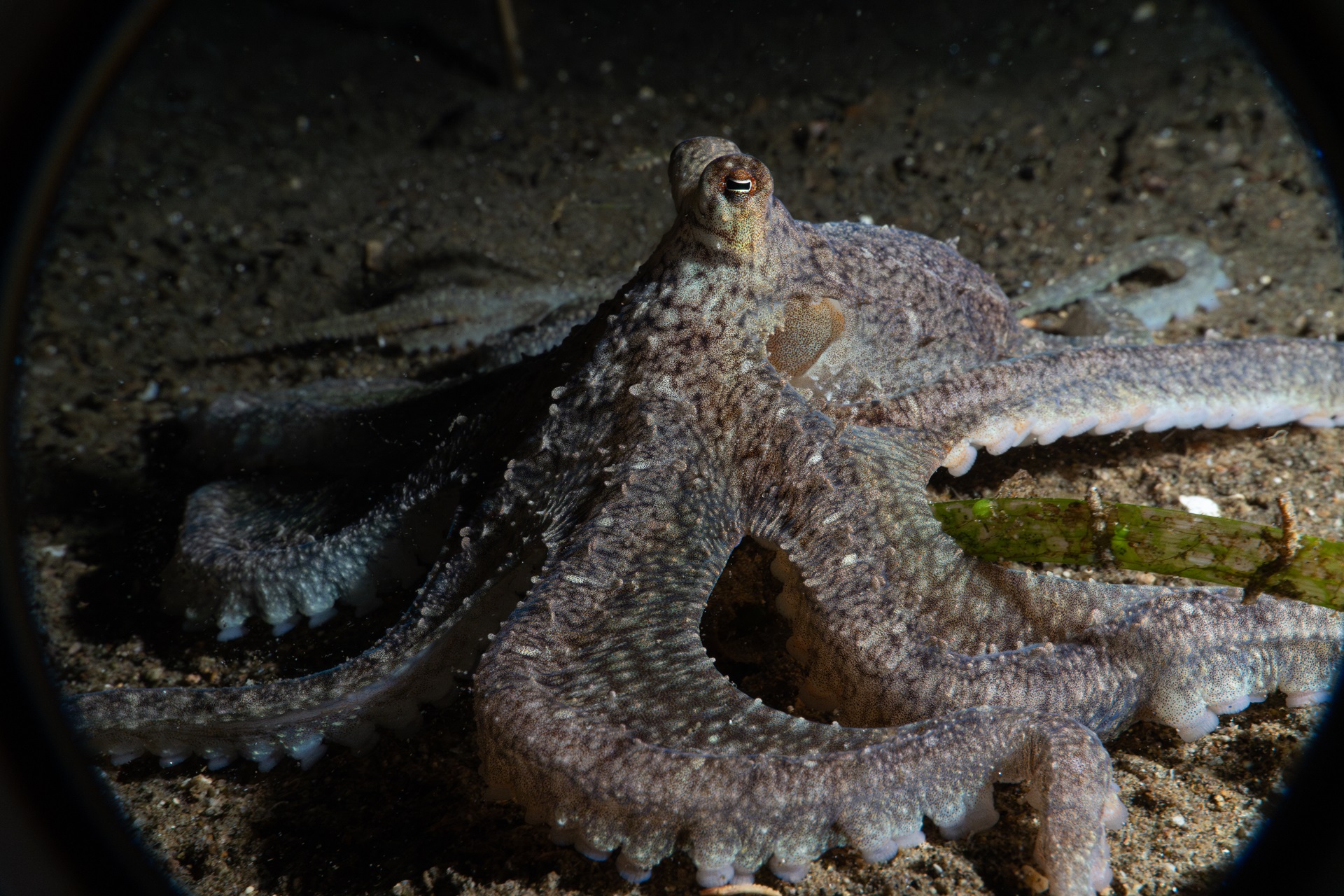
One of my favourite dives was at Punta, also known as the Secret Corner. The black volcanic sand might look unassuming at first, but it’s exactly this habitat that makes Dauin such a special muck diving destination. The black volcanic sand, rubble and seagrass habitats provide an incredible variety of hiding places and hunting grounds for these animals. The area is also protected by a number of marine sanctuaries, which help to maintain the biodiversity that makes these muck sites so exciting.
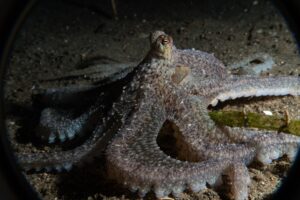
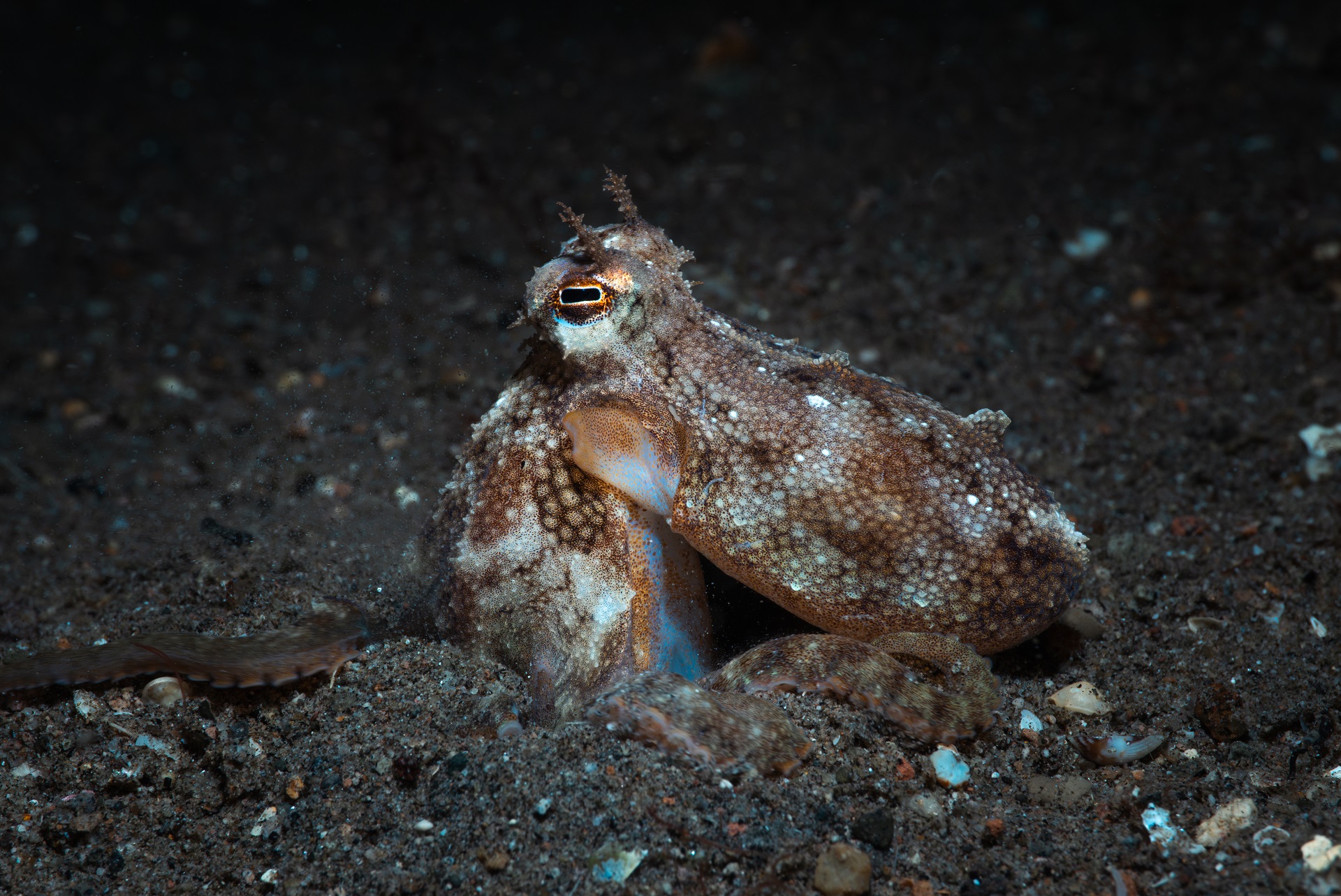
A Coconut Octopus hiding in the sand on our night dive at San Miguel North
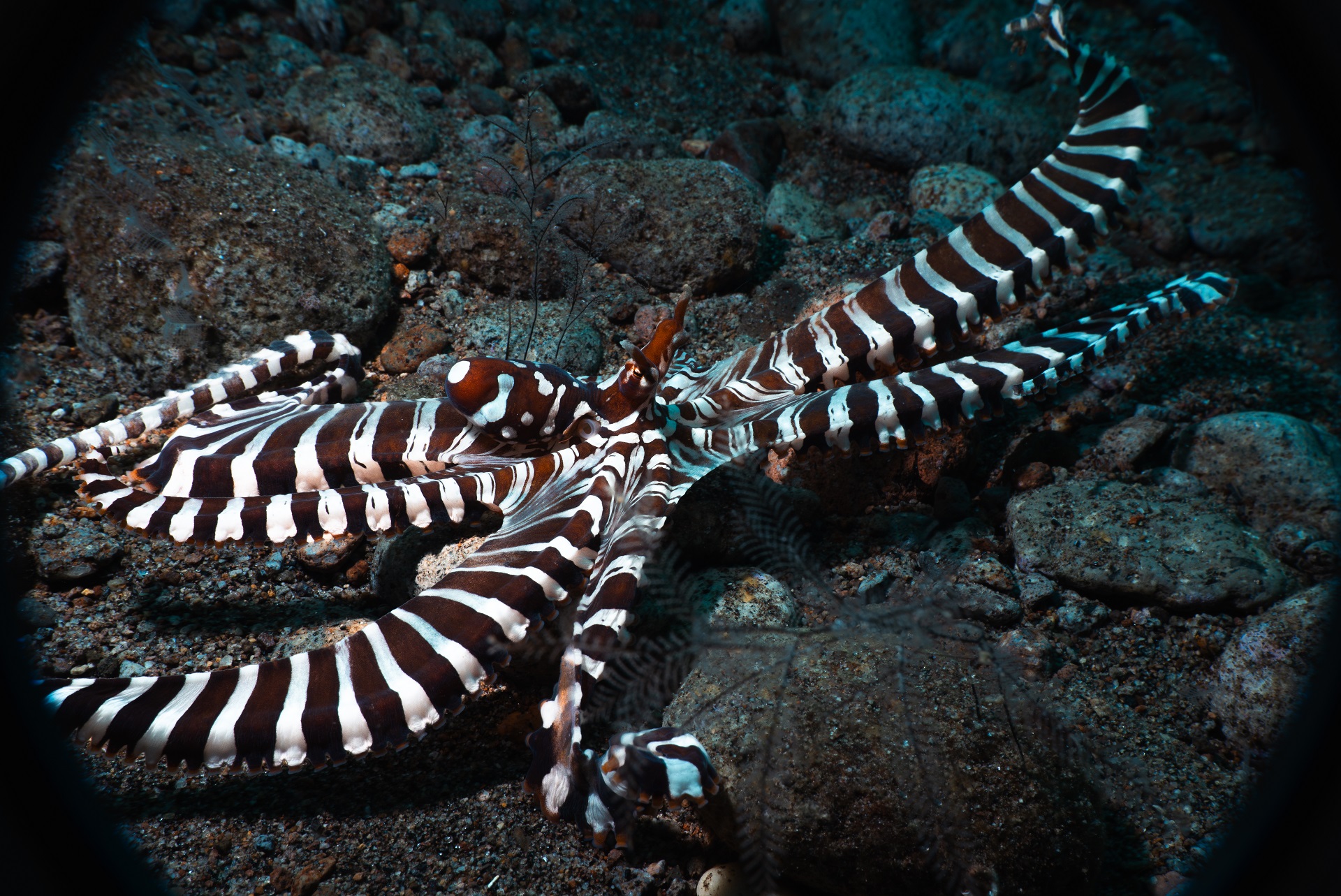
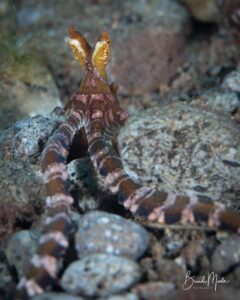
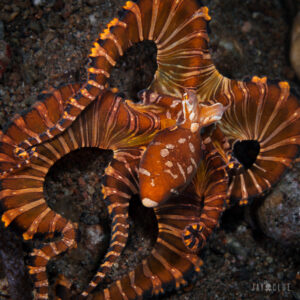
The wunderpus were particularly fascinating to watch. They seemed curious, and changed their texture, colours and movements as they walked across the sand. At one point, we watched one mimic the movement of a stingray, then later flash bold stripes to look like a lionfish.
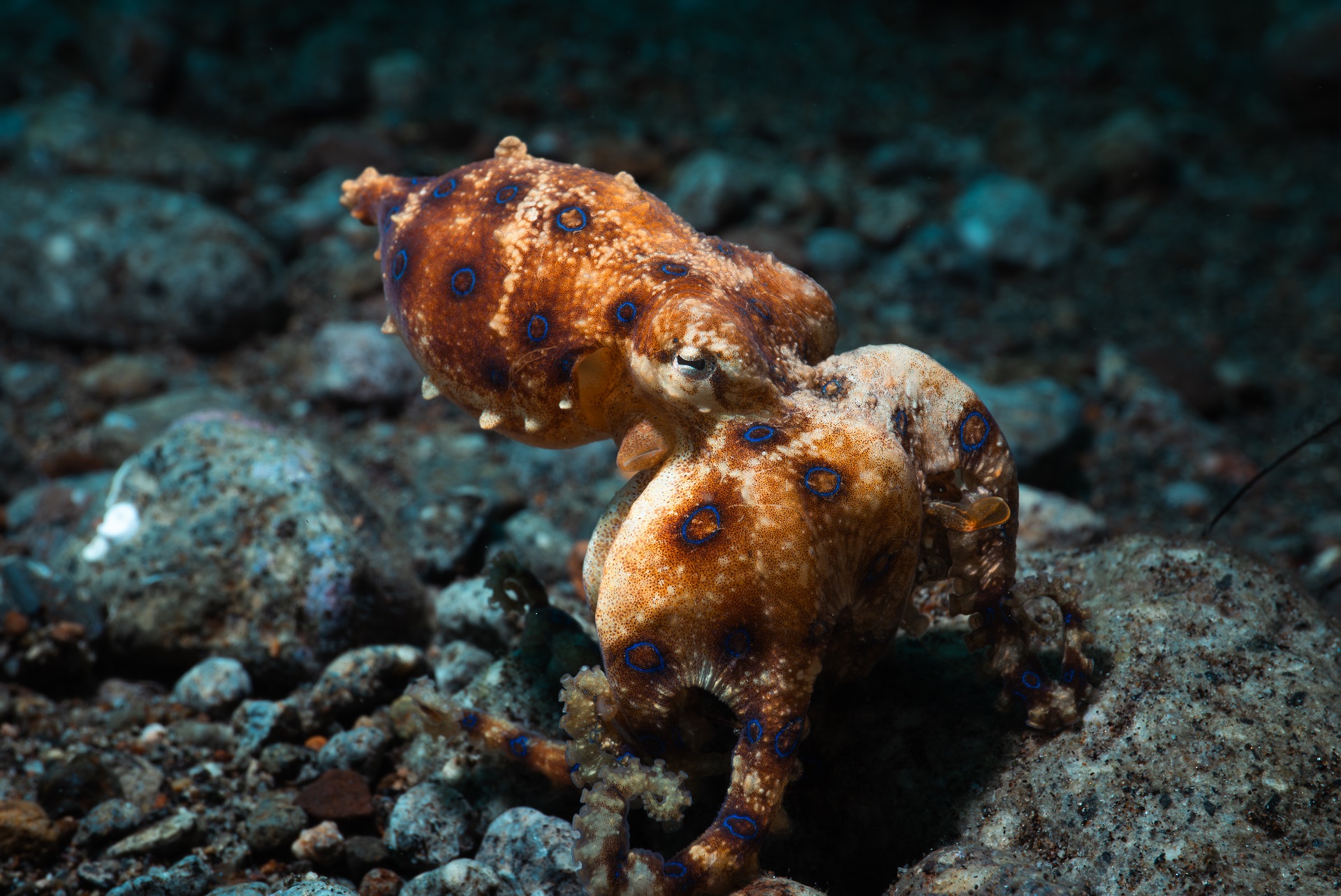
I even spotted a tiny juvenile wunderpus poking its head out of the sand. Once we noticed it, it came out to investigate us, putting on an incredible little show. After that, I watched a blue-ringed octopus hunting, catching and eating a crab, which overall made one very exciting dive!
We also happened to spot two coconut octopus on separate occasions. Our first encounter was at San Miguel North during a night dive, and the second was at Talisay during a day dive. The latter encounter was by far my favourite, because we found this octopus wandering across the sand carrying pieces of shells to use as its portable shelter. It’s still on my diving-bucket-list to see a coconut octopus hiding in an actual coconut, so I think I will just have to return to Dauin as soon as possible.
Cuttlefish After Dark
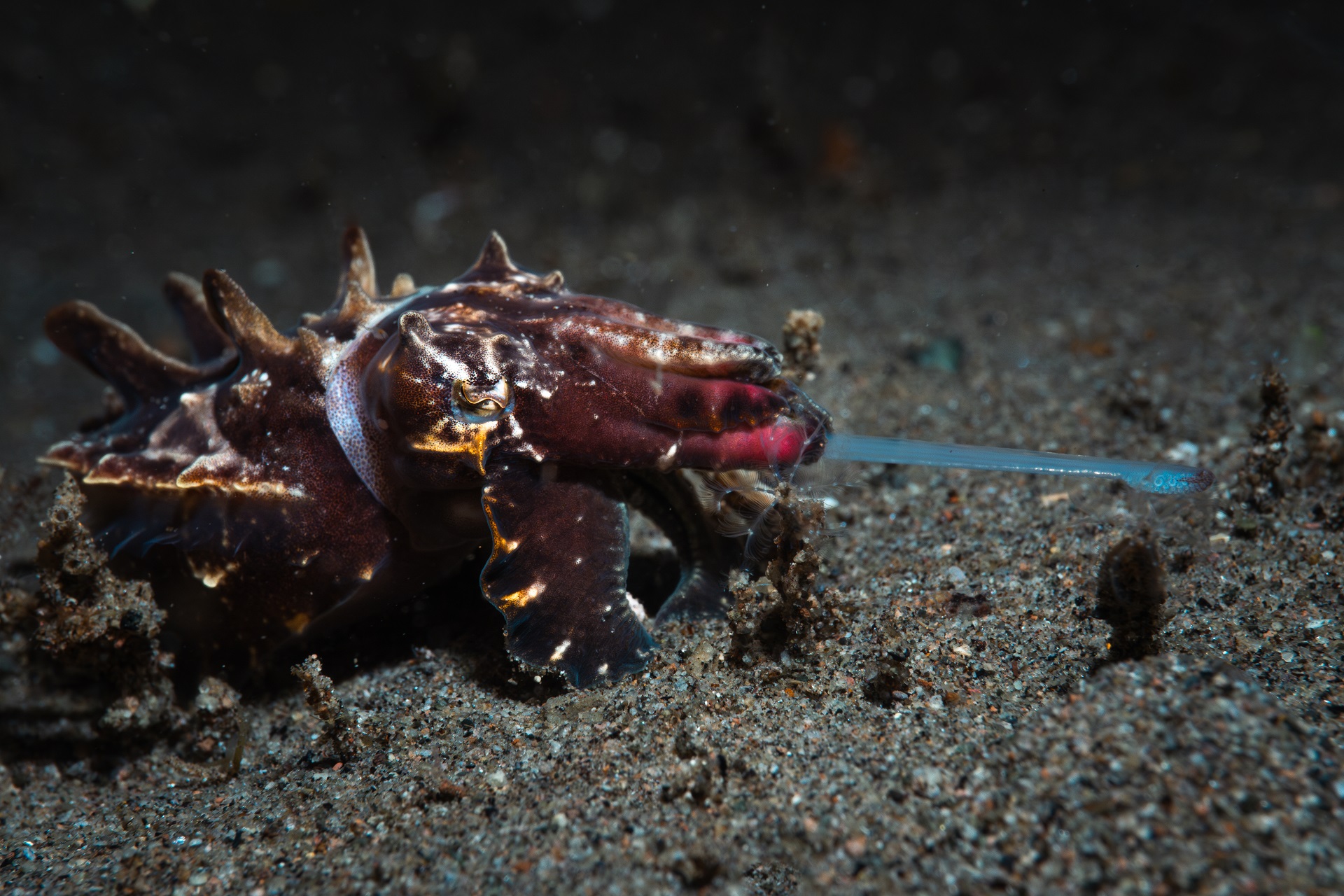
Night diving in Dauin really does feel like entering a completely different ecosystem. The highlight of our night dives around San Miguel were the different species of cuttlefish, from broadclub to pharaoh cuttlefish, to the elusive and poisonous flamboyant cuttlefish. On one night dive, we watched a flamboyant cuttlefish walk across the sand while hunting tiny shrimps with its long tentacles! In the meantime, it would flash its vibrant yellow and pink colours and patterns across its body to warn off any predators.
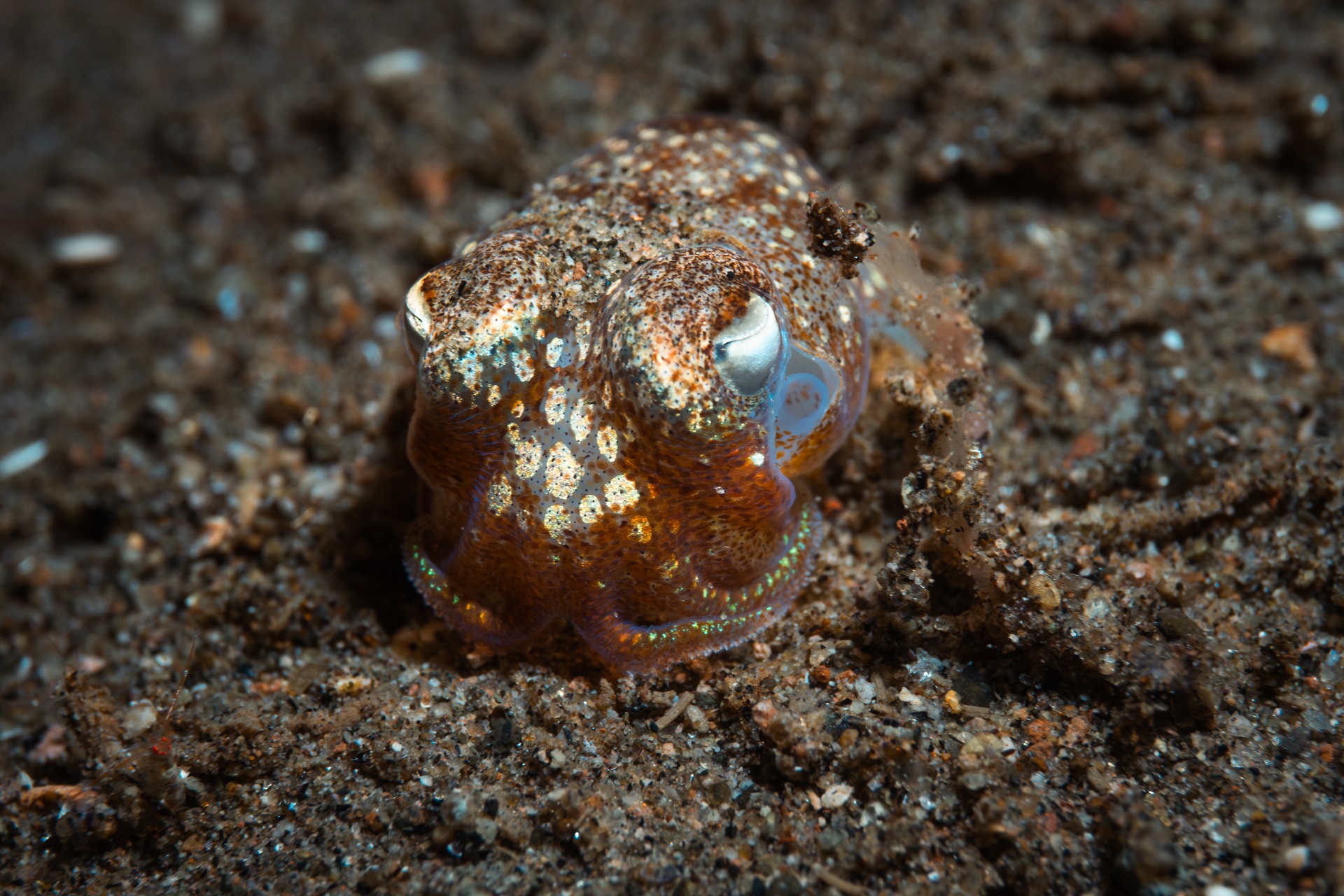
Our dive guide also managed to spot a tiny dwarf cuttlefish as well as a pygmy squid hiding amongst the seagrass bed. They were so tiny and adorable, and I would have completely missed them if I wasn’t paying attention. Along the sand, there must have been hundreds of tiny bobtail squids hiding, because I managed to spot one or two poking their eyes out at us with every couple of fin kicks.
The Squid of the Blackwater
Things got really bizarre on our blackwater dive, when we jumped into the open ocean at night over thousands of metres of water. We jumped in a bit later than a typical night dive because we had to wait for the dark to really settle and the daily vertical migration of marine life to begin. Every night, tiny zooplankton and other species emerge from the depths of the seafloor to the surface to feel on the plankton at night. They do this at night to feed under the cover of the darkness and hide from predators during the day. Among the strange creatures we encountered on our blackwater dive were bigfin reef squid, pygmy squids and diamond squids, not to mention the juvenile fish, crabs, salps and countless other organisms!
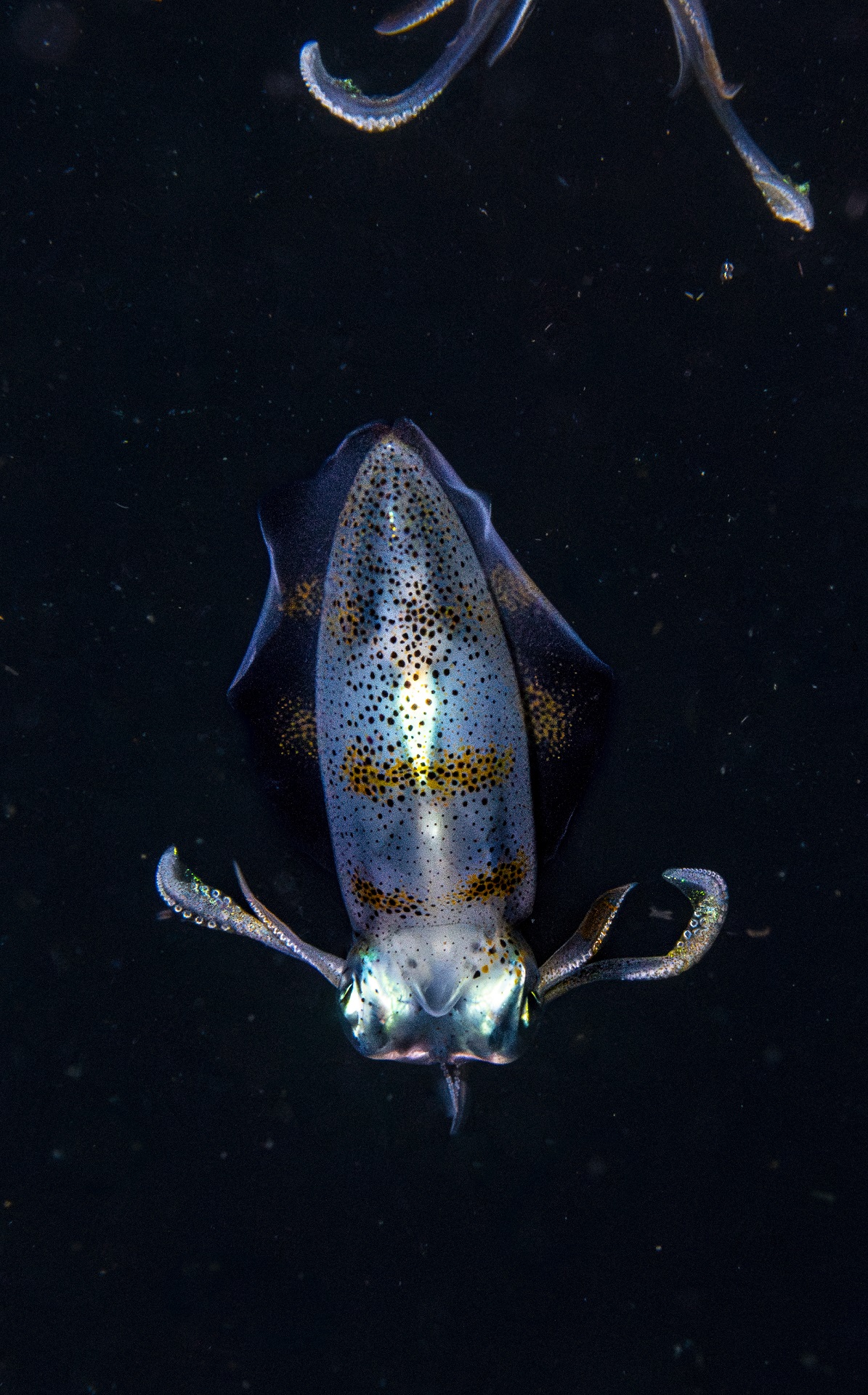
The diamond squid were particularly spectacular, not only because I hadn’t seen one before, but at one point, we were completely surrounded by hundreds of them swimming through the darkness. It felt more like being in outer space than underwater.
In Summary
Dauin completely changed my perception of muck diving. What initially looks like a simple black sand slope is actually an incredibly busy ecosystem filled with some of the weirdest and most wonderful animals in the ocean.
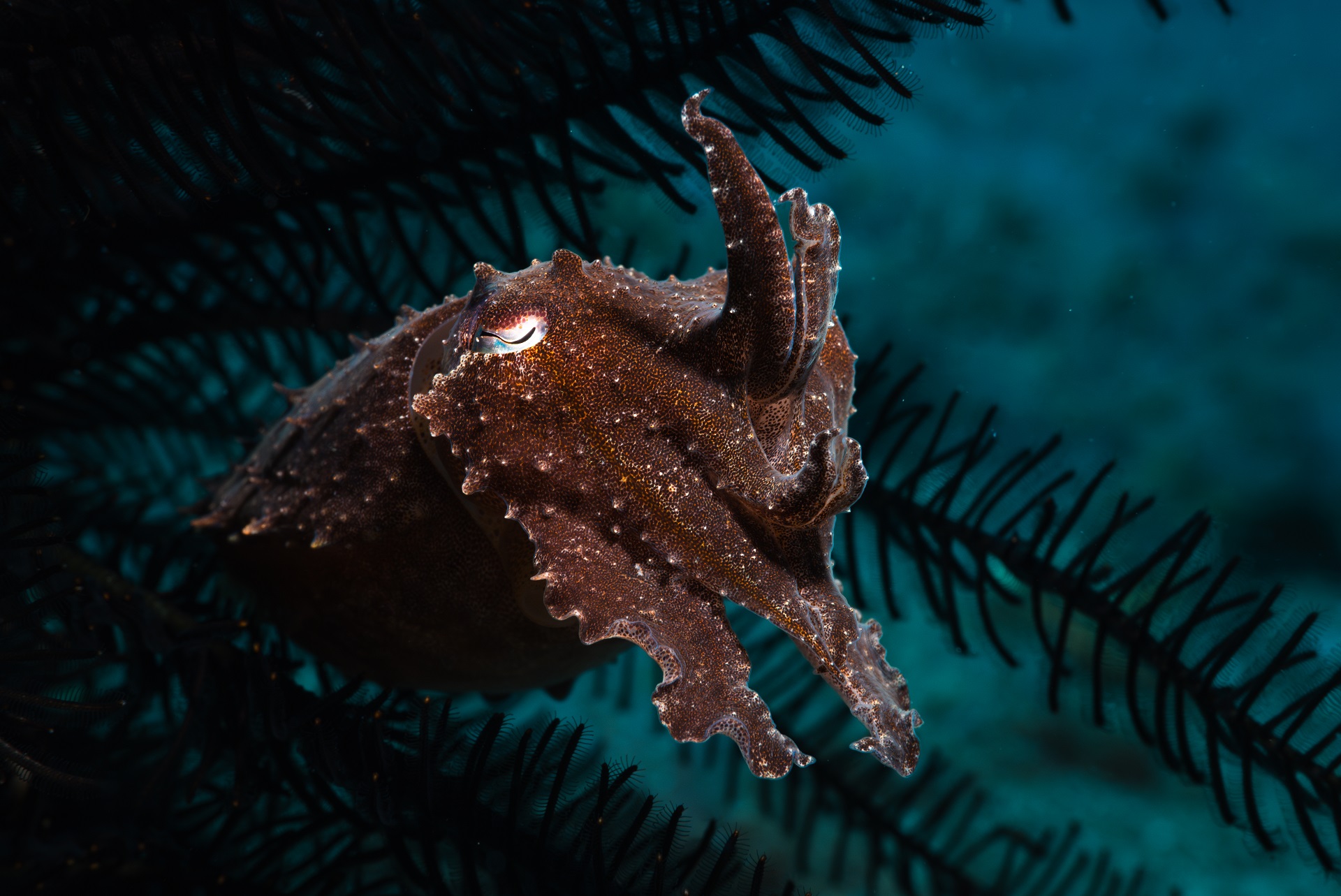
Clearly, the cephalopods were the stars of the trip. Watching a blue-ringed octopus hunt or a tiny bobtail squid burying itself in the sand was just the kind of encounter that made us want to jump straight back in as soon as we surfaced. Luckily, Atlantis offers five dives per day, so we made the most of every moment we had!
For underwater photographers, Dauin is particularly addictive. You can spend an entire dive moving only a few metres, stopping every few seconds because your guide has spotted something else hiding in the sand. Ultimately, if cephalopods are on your diving bucket list, then Dauin should be too.