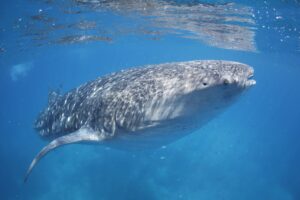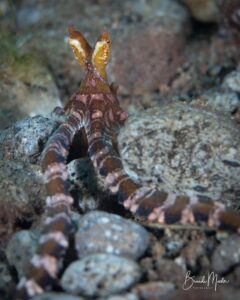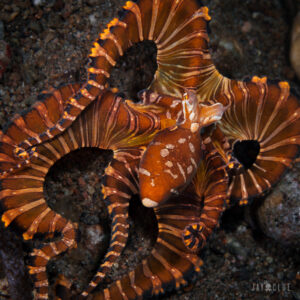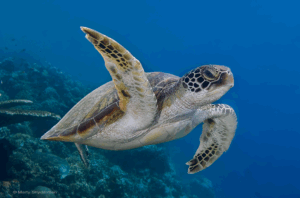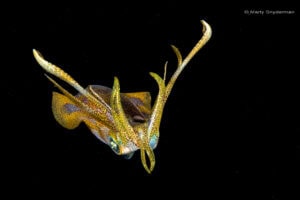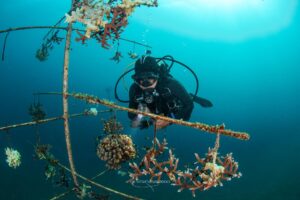

The Philippines is a hotspot for marine biodiversity, and we regularly dive with special and sought-after creatures such as blue-ringed octopuses, wonderpuses, ornate ghost pipefish, and even whale sharks, to name just a few!
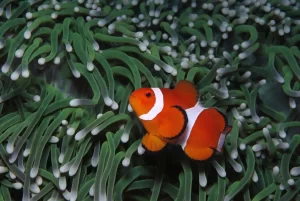
But one critter always steals the show — so much so that it became the star of a Disney movie. We are, of course, referring to the lovely anemonefish!
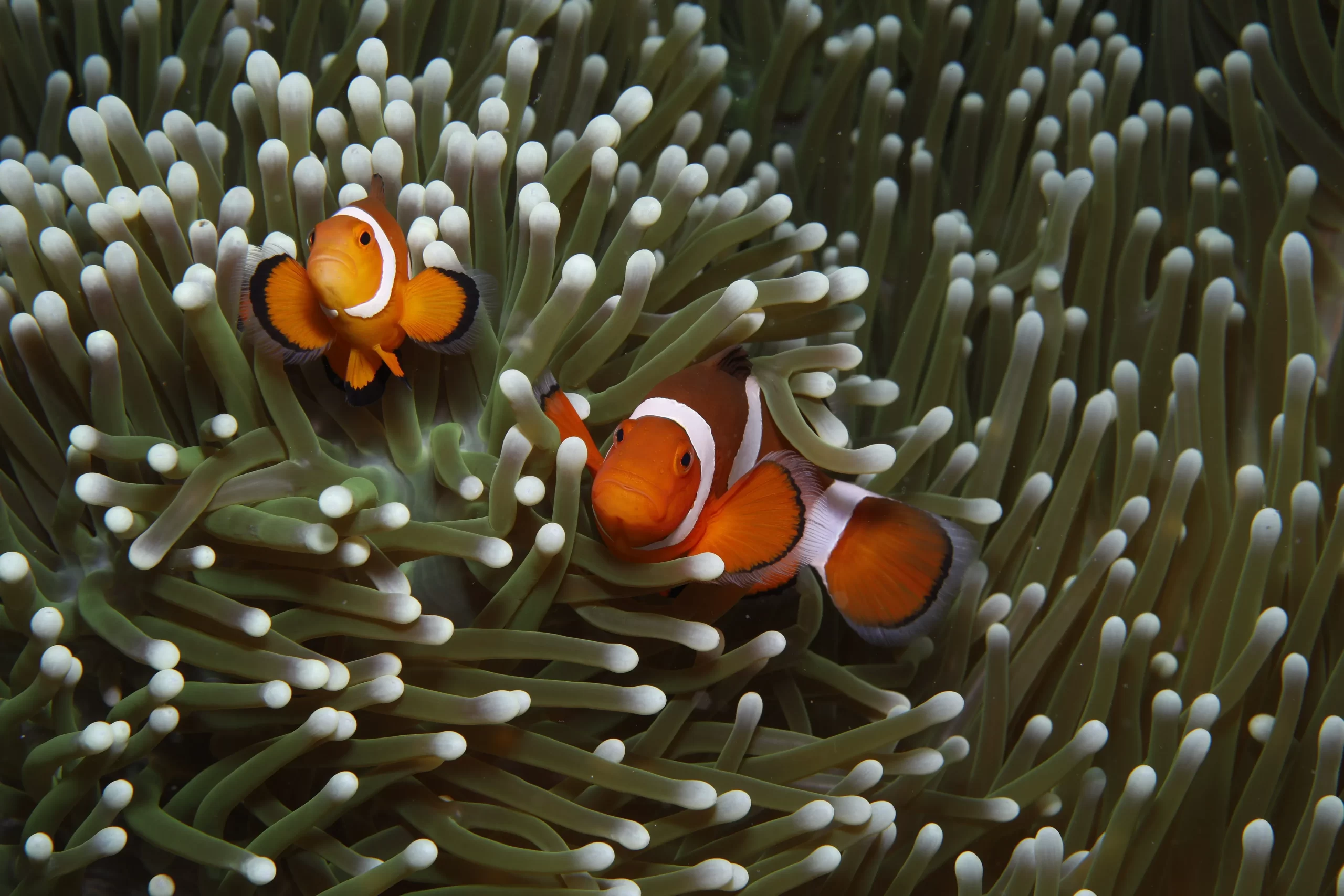
Anemonefish have an instant ability to capture divers’ attention and fill memory cards thanks to their extreme cuteness and fun behavior.
These fish are found throughout the tropical waters of the Indian Ocean, the Red Sea, and the western Pacific. Their coloration varies widely, ranging from orange and red to black and pink, often marked with bright white bands.
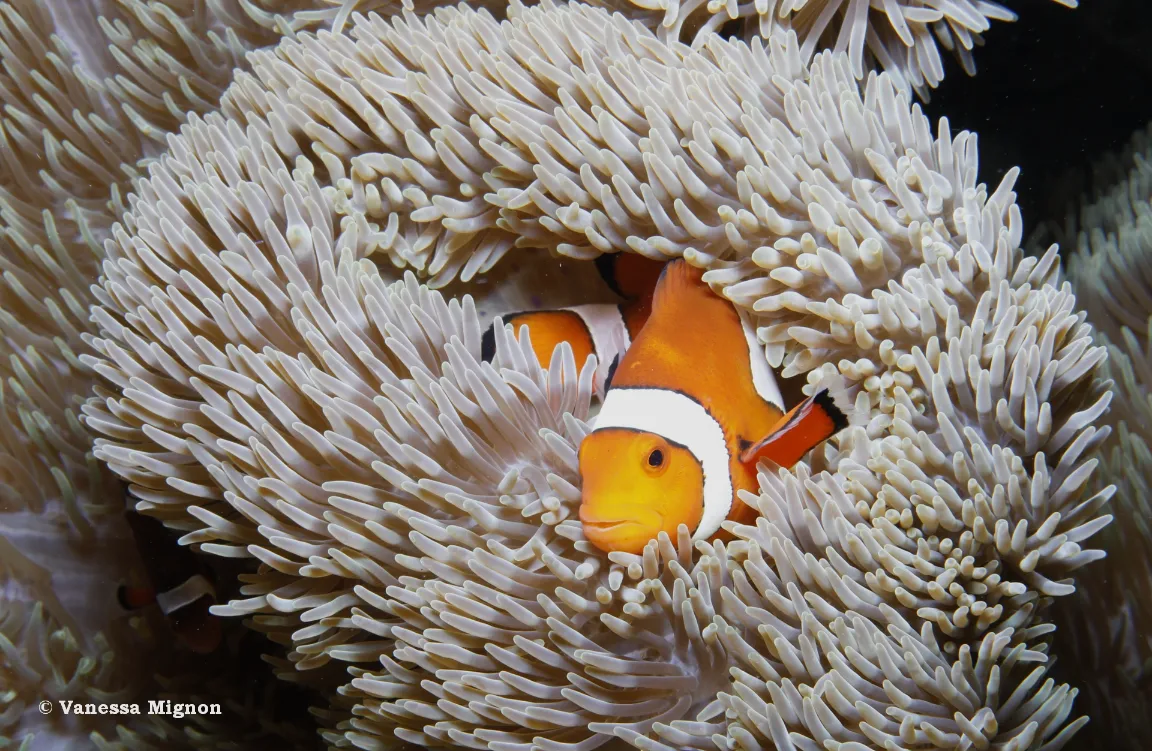
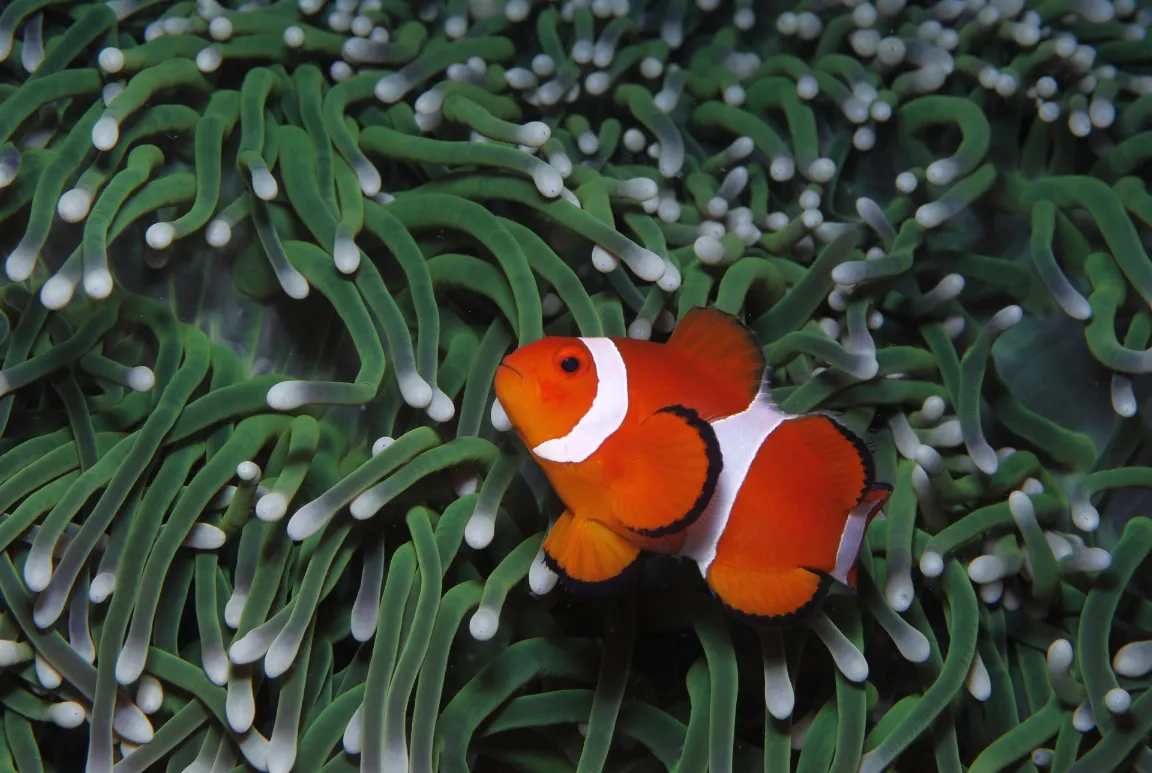
We regularly spot various species when diving around our resorts and from our liveaboards.
Typically measuring between 7 and 15 centimeters as adults, anemonefish are sexually dimorphic. Females are noticeably larger, more robust, and often more vividly colored than males, although these differences only become apparent once maturity is reached. Remarkably, all individuals begin life as males, possessing active male reproductive organs alongside inactive female ones.
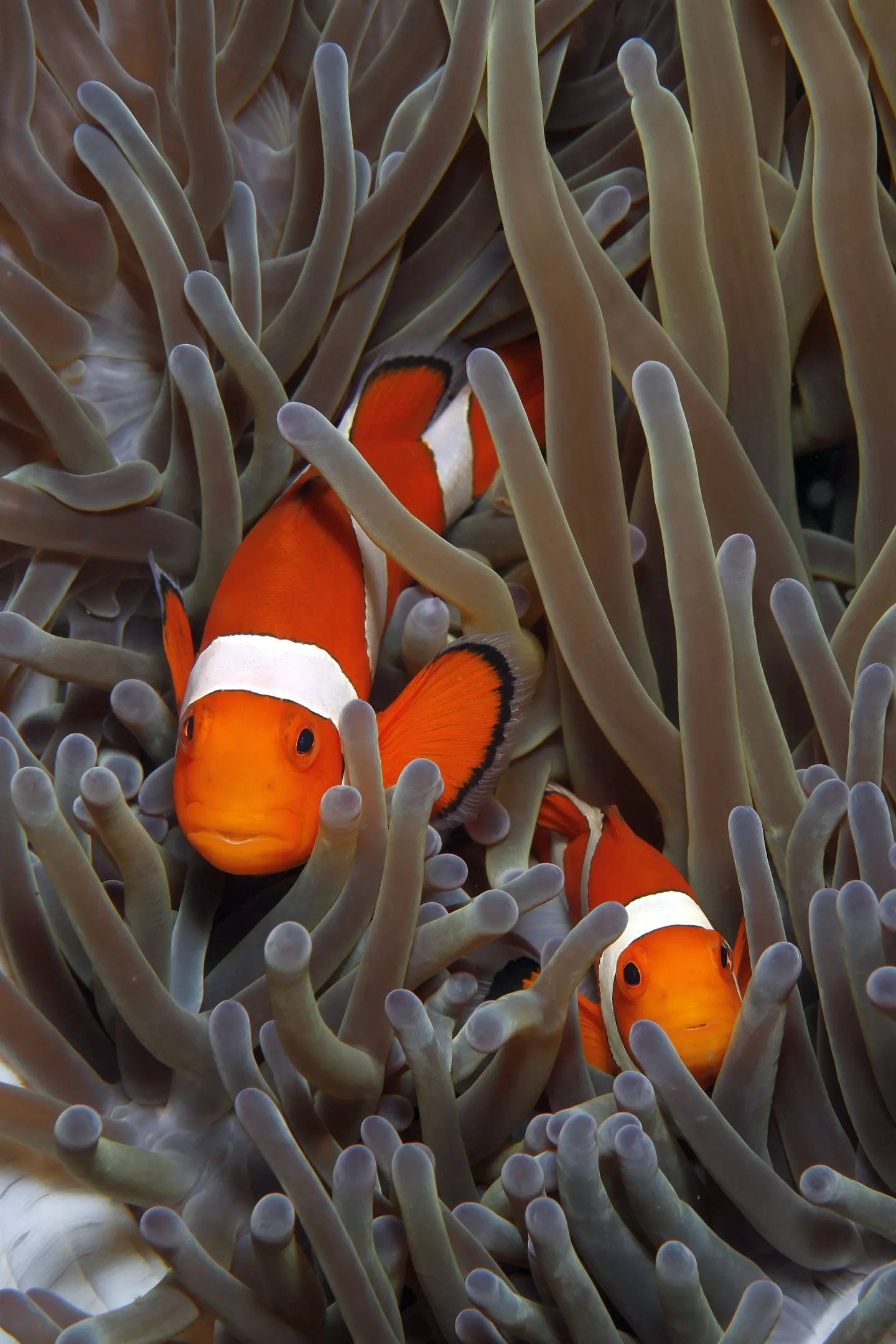
Living in structured groups, anemonefish establish strict dominance hierarchies centered around a single breeding female and a dominant male, accompanied by several smaller non-breeding males. Their social system is governed by sequential hermaphroditism, meaning the dominant individual becomes female while the second-largest assumes the role of breeding male. This transition to female is irreversible once it occurs.
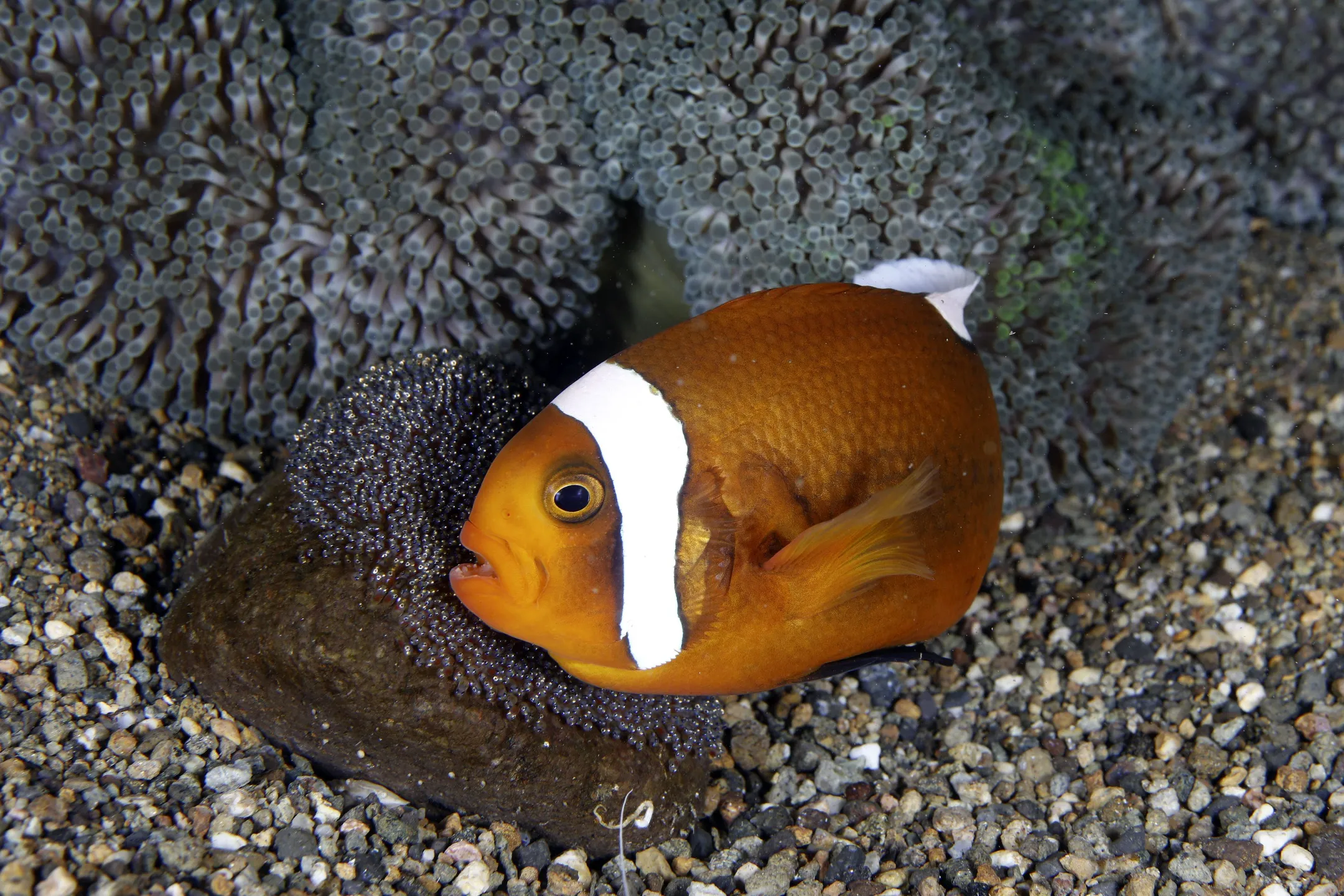
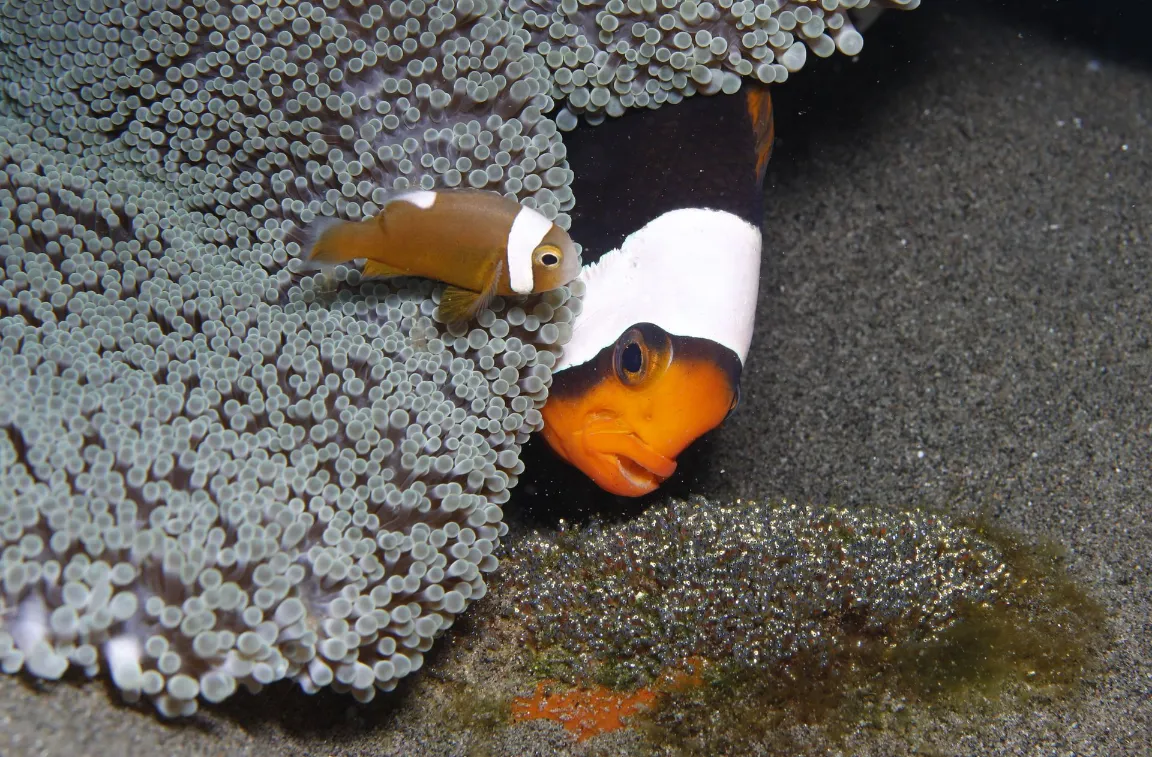
We often spot clutches of eggs at our dive sites, for example, in San Miguel South or Sahara. Breeding involves careful preparation of a cleaned surface near the protective anemone host. Females may lay hundreds to over a thousand eggs in a single spawning, and reproduction can occur multiple times throughout the year. Both parents guard the clutch, although the male assumes most of the maintenance duties, fanning and cleaning the eggs to ensure oxygen flow and prevent fungal growth. Hatching occurs after roughly 6 to 10 days, releasing larvae into ocean currents that eventually carry them to new habitats. Lifespans can range from 6 to 10 years.
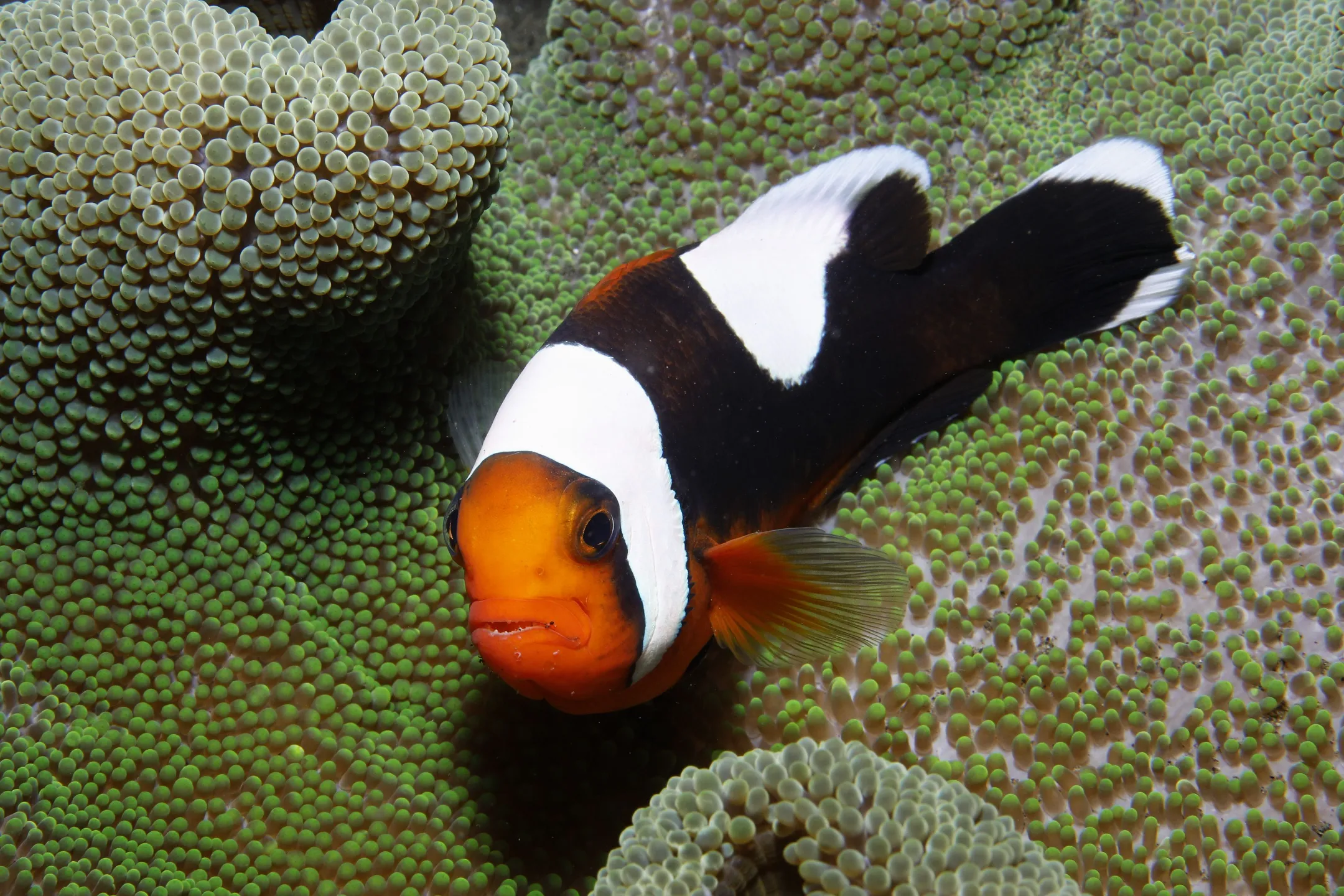
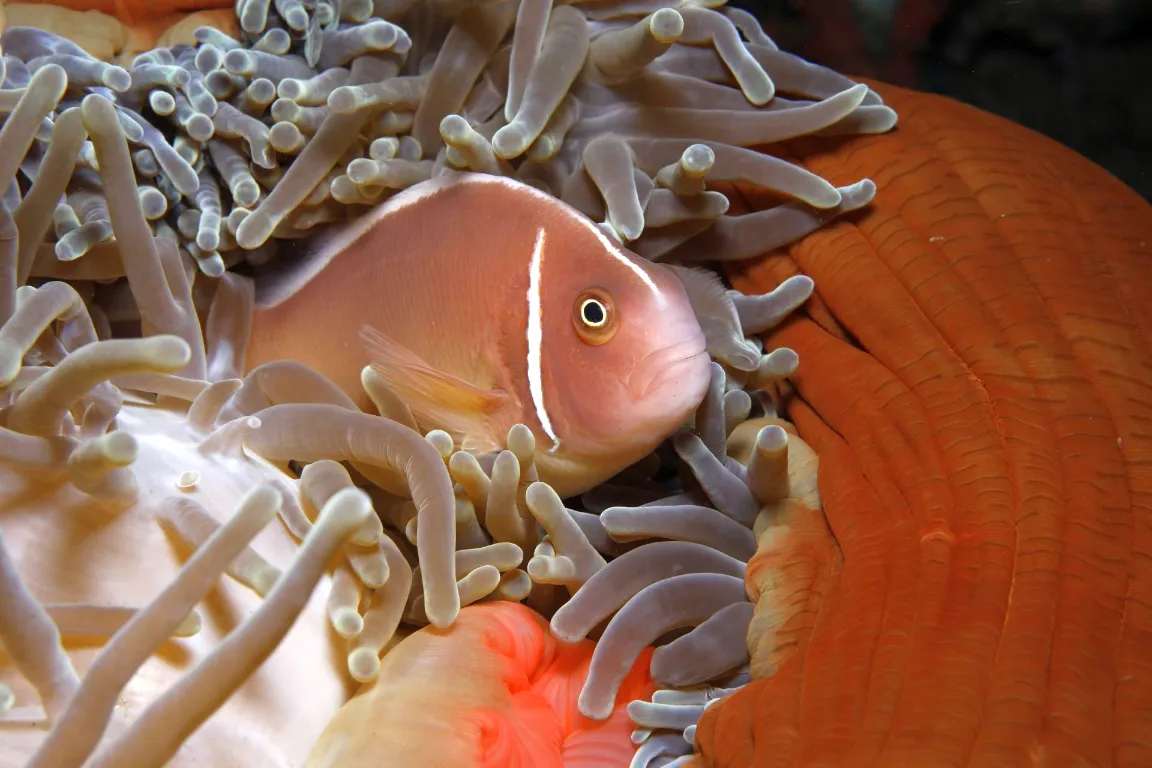
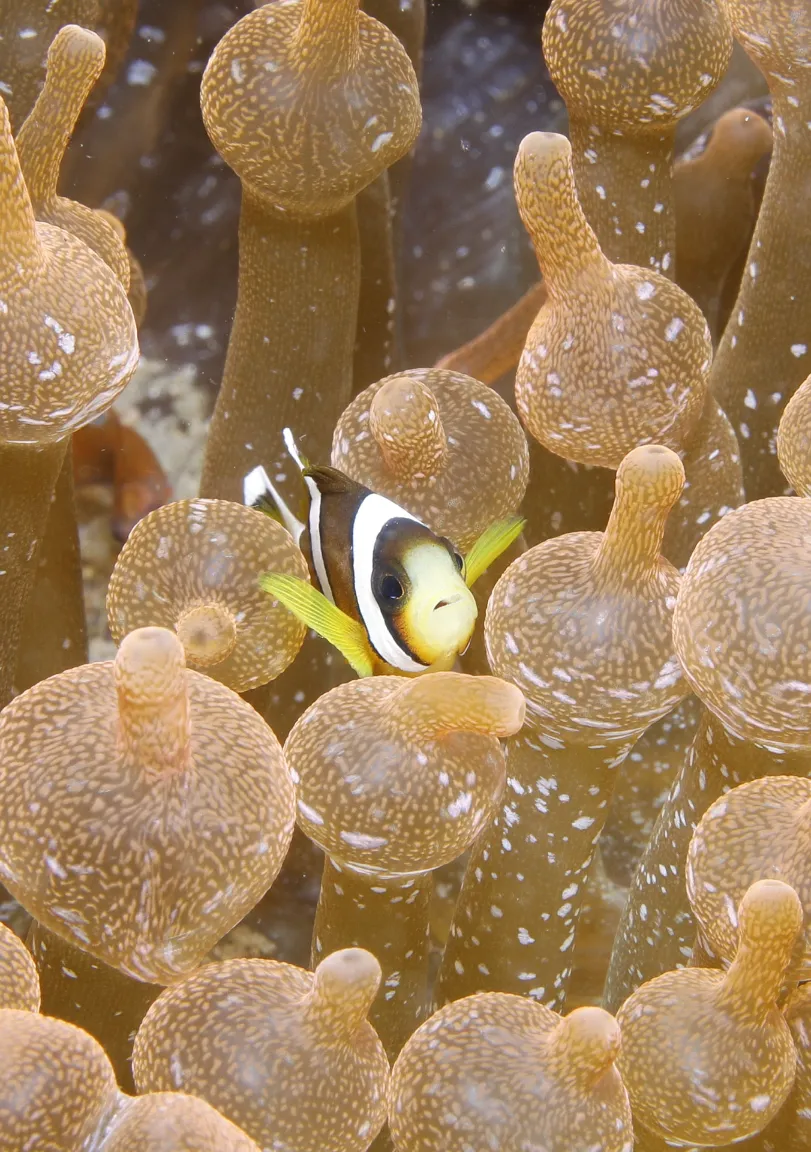
Anemonefish maintain a mutual partnership with sea anemones, gaining shelter among the stinging tentacles while providing cleaning services and nutrients in return. Each species of anemonefish tends to favor specific species of anemone, as they are not able to develop immunity to the stings of all anemones. This explains why different species are usually associated with specific anemones. There are over 1,000 species of sea anemone, but only 10 are known to provide suitable homes for anemonefish.
This also explains why anemonefish defend their hosts so vigorously. We can’t help but smile when a tiny but bold anemonefish launches itself at a photographer who gets too close!
If you would like to meet these delightful little reef residents for yourself, join us at Atlantis for an unforgettable diving adventure!
Words and images by Vanessa Mignon