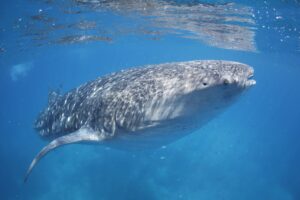

The Philippines is home to an astonishing diversity of marine life, from vibrant coral reefs to some of the ocean’s most extraordinary creatures. Among them is the biggest fish in the world and a true wish-list encounter for many divers: the whale shark. Often called the “mighty gentle giant,” the whale shark (Rhincodon typus) truly lives up to its name and captivates anyone lucky enough to encounter it.
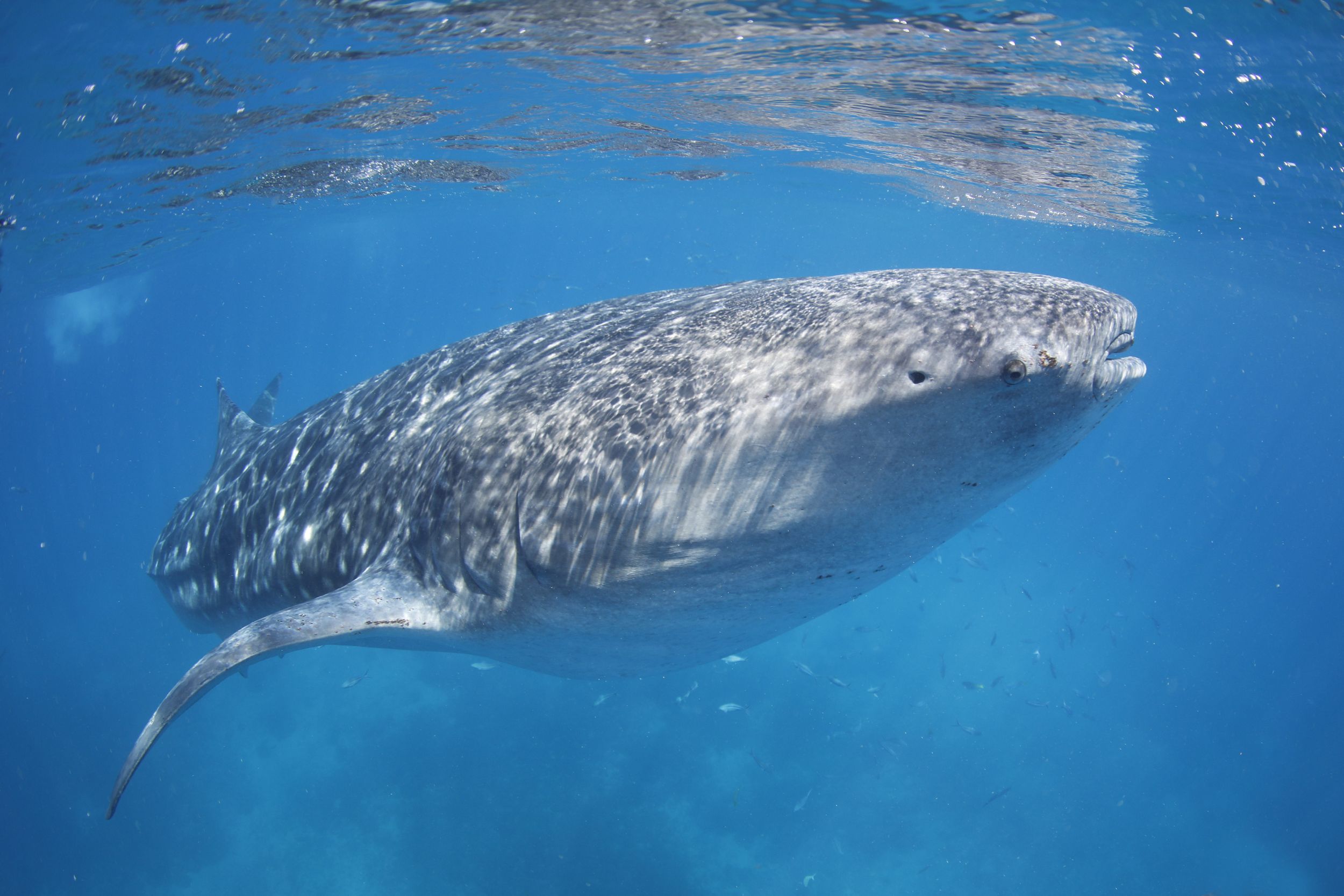
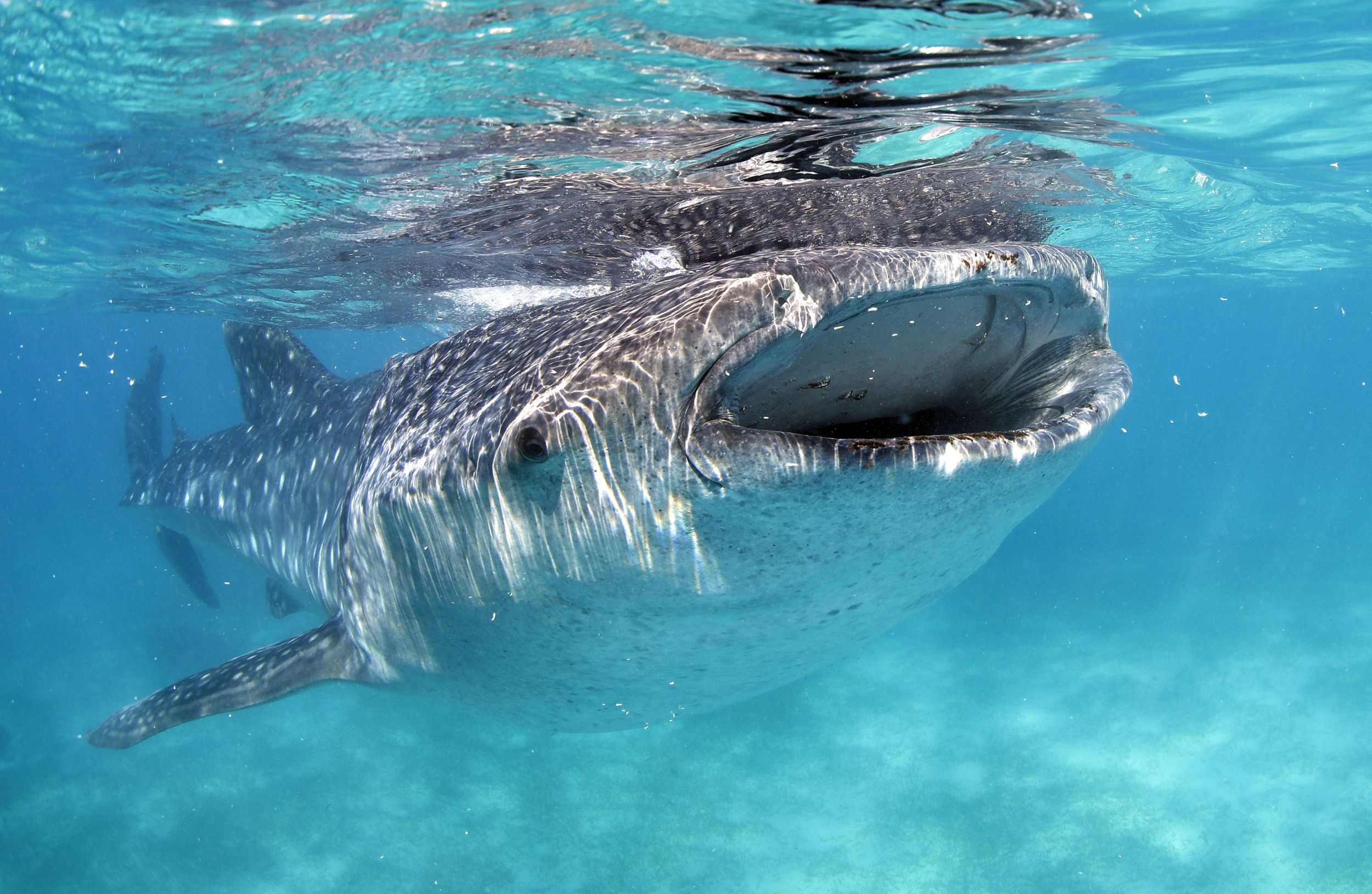
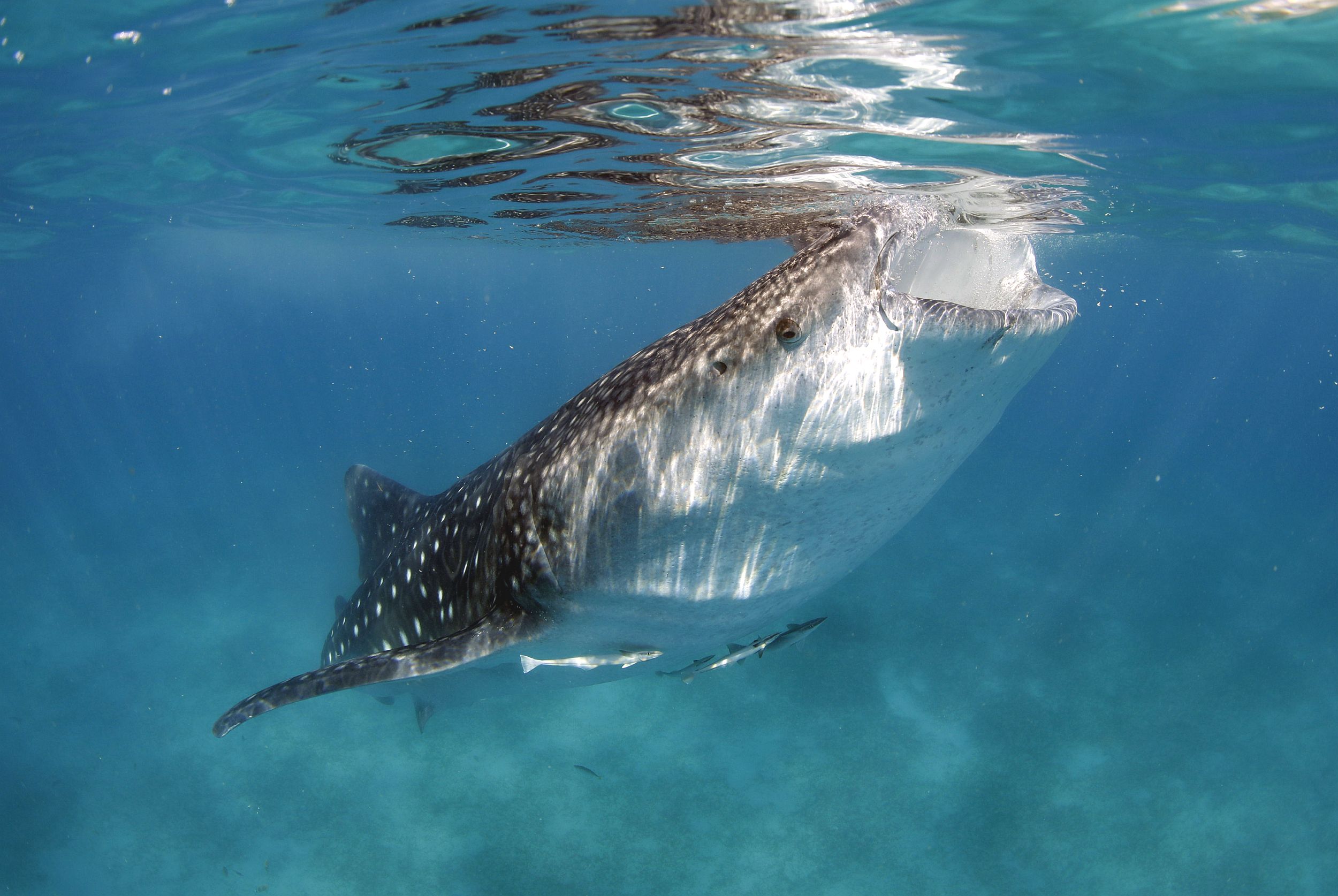
Whale sharks are the largest living fish and rank among the biggest creatures in the ocean. On average they measure around 12 metres in length and weigh between 15 and 20 tonnes, although some individuals grow much bigger, with reports of animals reaching18 metres. Despite their enormous size, these sharks feed on some of the ocean’s smallest organisms. They are filter feeders, gathering plankton, small crustaceans, fish larvae and other tiny prey either by actively sucking in water or by swimming with their mouths open through food-rich areas. Inside their mouths are specialised filter pads that trap food as water exits through the gills.
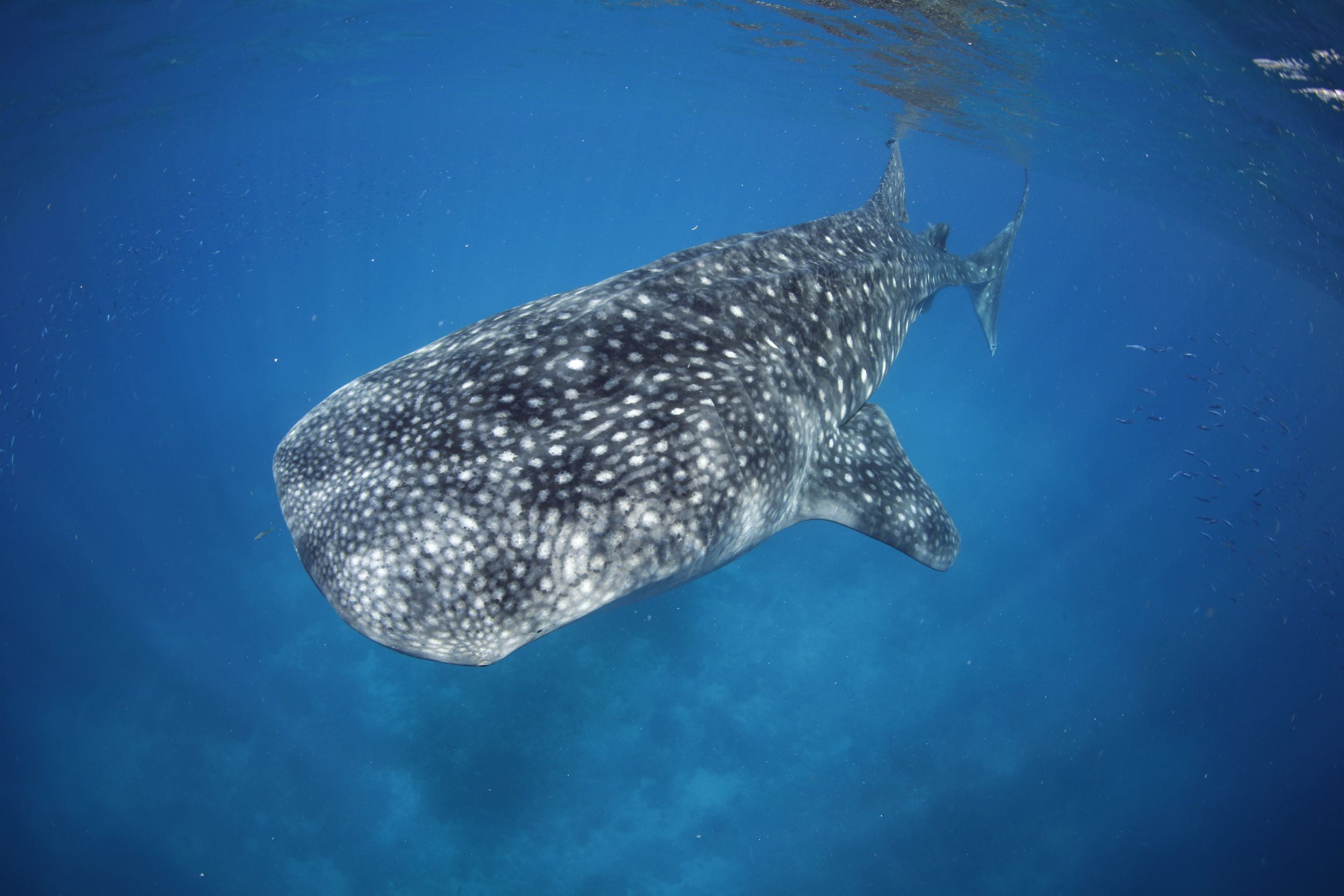
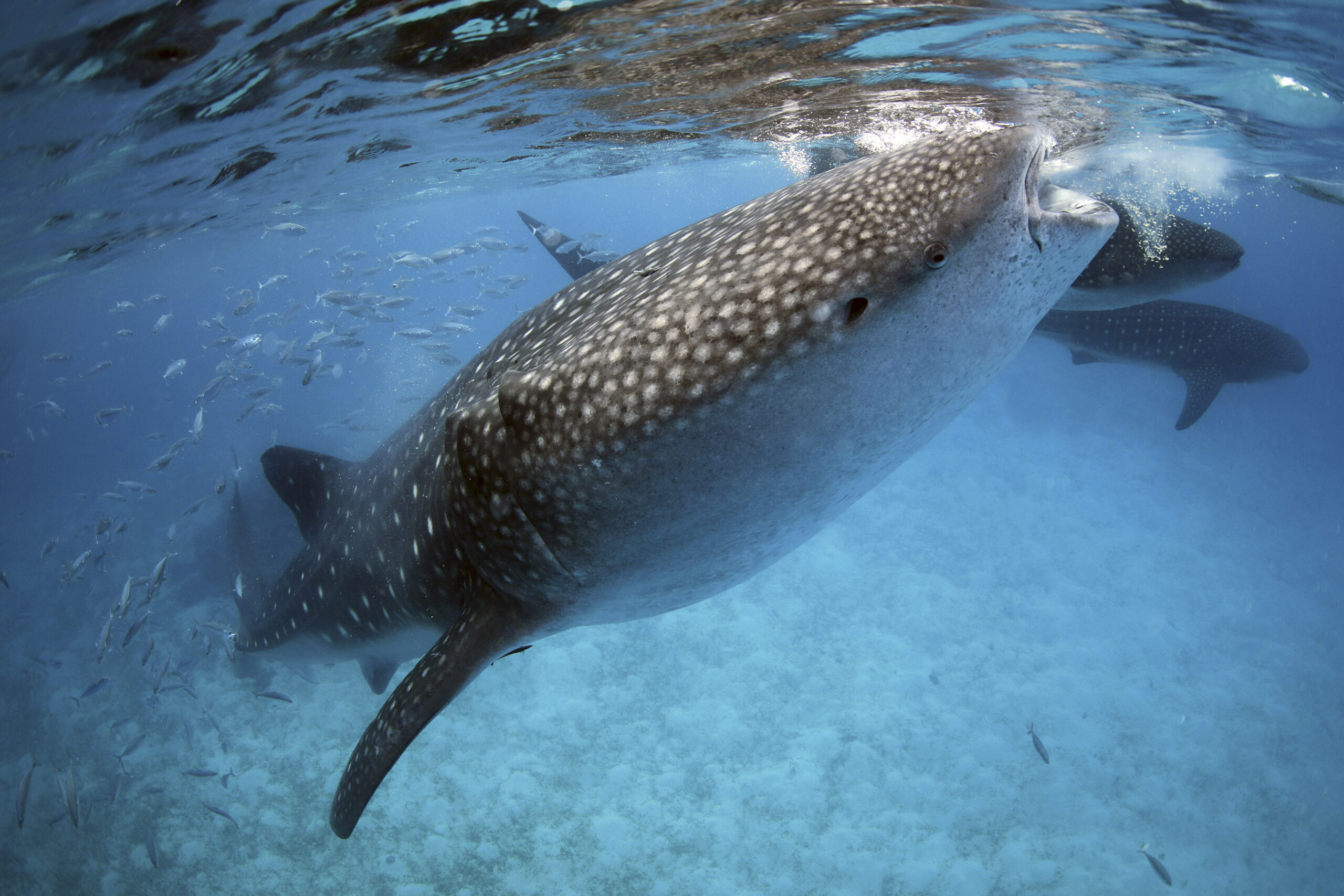
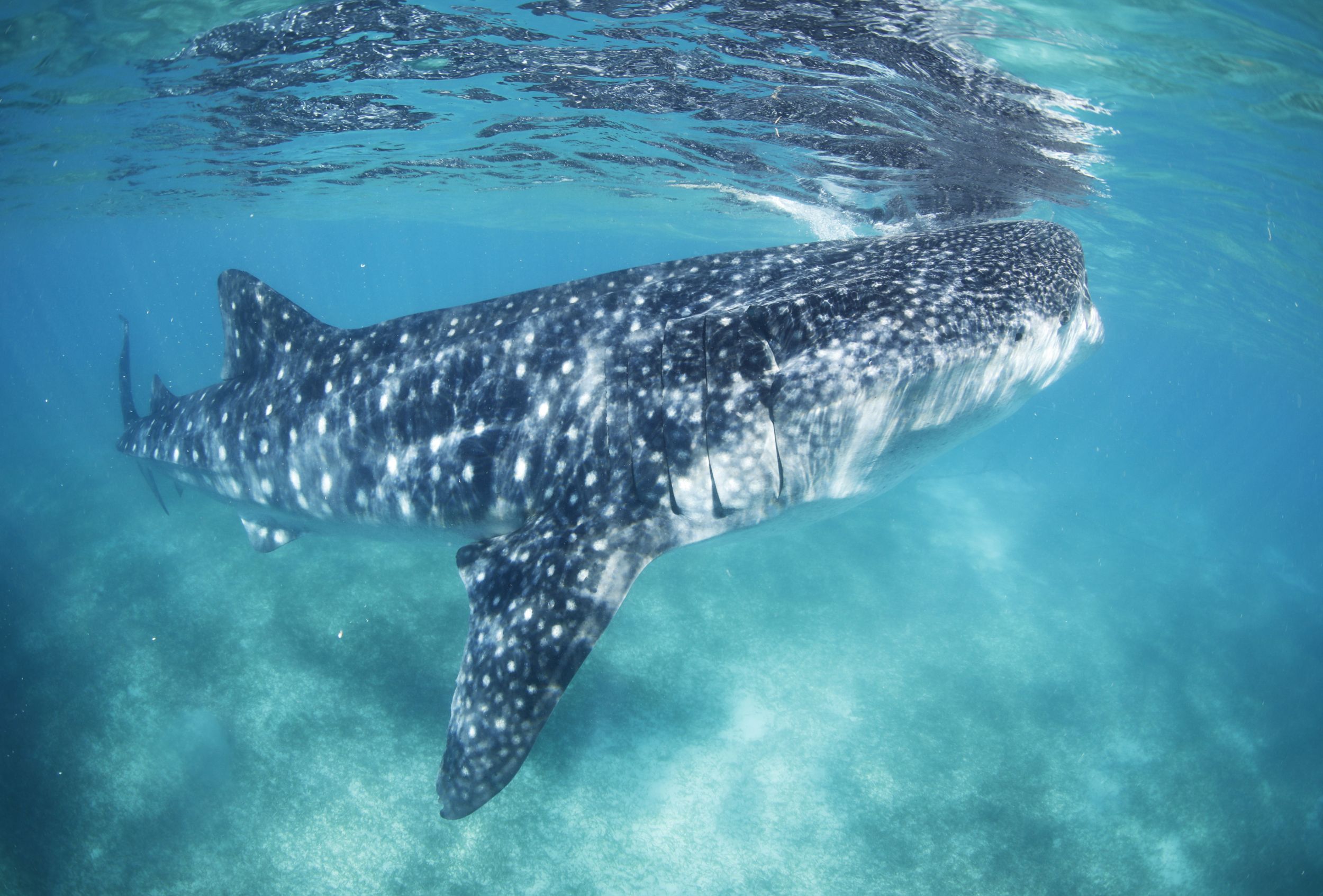
Interestingly, whale sharks possess around 3,000 tiny teeth arranged in hundreds of rows, yet these teeth appear to serve no real purpose and are considered vestigial structures inherited from ancient ancestors. Even more surprising is the discovery that their eyes are protected by tiny tooth-like structures called dermal denticles. Because their eyes protrude and lack eyelids, these denticles act like armour, and whale sharks can even retract their eyeballs slightly into their skulls for extra protection.
Whale sharks inhabit tropical and warm temperate seas around the world and often migrate thousands of kilometres between feeding grounds. Their reproduction remains mysterious: females retain eggs inside their bodies until they hatch, giving birth to live young, yet an actual birth has never been observed. A female caught near Taiwan in the mid-1990s contained about 300 embryos at different stages of development, revealing that females can store sperm and fertilise eggs over time. Whale sharks are thought to be born at around 40–60 cm, yet very few individuals under three metres have ever been seen, leaving their early life stages largely unknown.
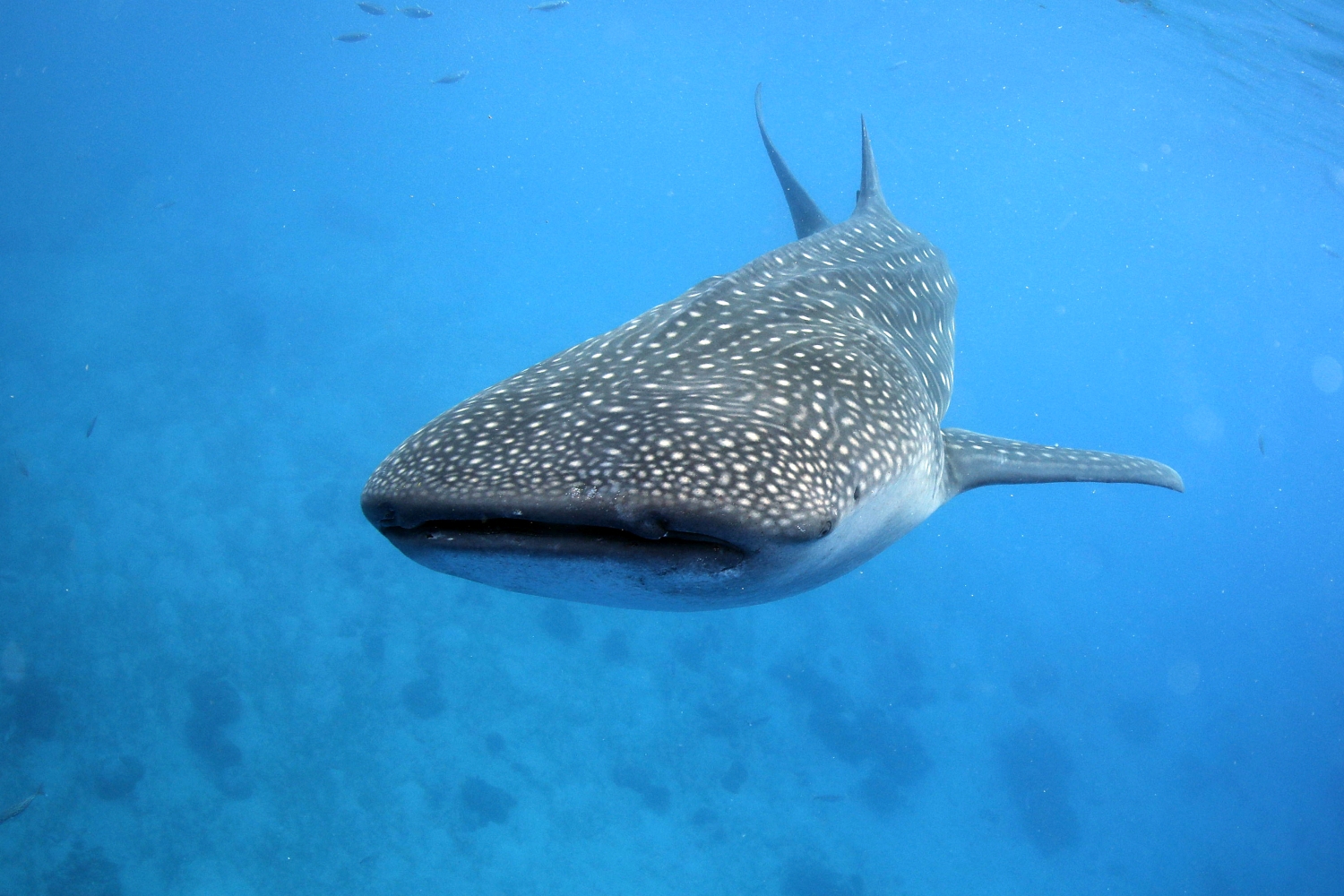
Whale sharks are currently listed as endangered on the IUCN Red List and face threats such as fishing, ship strikes and pollution. They are protected in the Philippines, helping safeguard one of the world’s largest known whale shark populations.