

Apo Reef, Wrecks of Coron & Dugongs
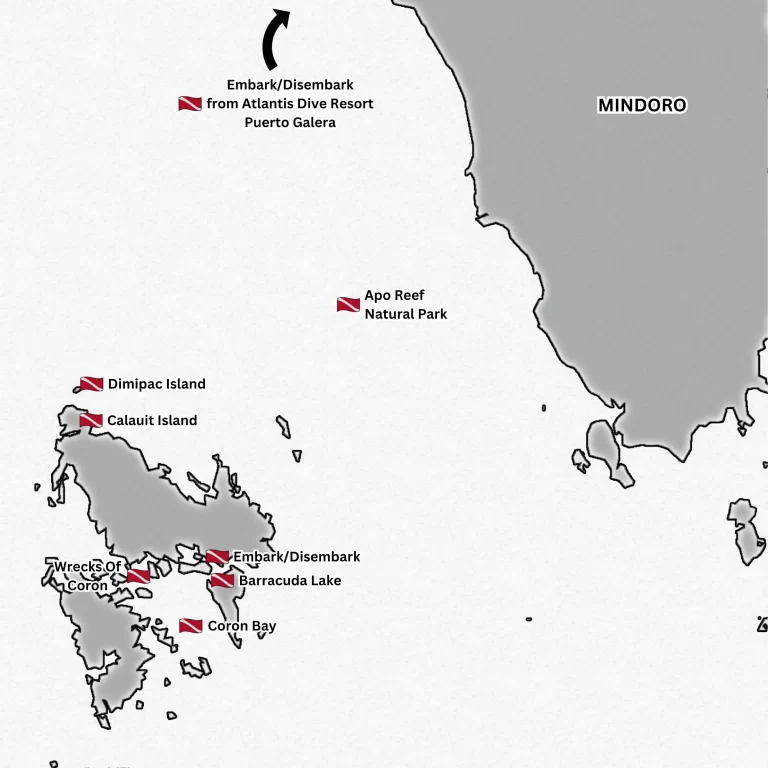
Puerto Galera to Coron
- Day 1: Embarkation at 5 pm
- Day 2+3: Apo Reef
- Day 4: Dugongs, Caluit & Dimipac Island
- Day 5+6: Wreck of Coron
- Day 7: Barracuda Lake
- Day 8: Disembarkation 7 am
Coron to Puerto Galera
- Day 1: Embarkation at 5 pm
- Day 2+3: Wrecks of Coron
- Day 4: Barracuda Lake
- Day 5: Dugongs, Caluit & Dimipac Island
- Day 6+7: Apo Reef
- Day 8: Disembarkation 7 am
Diving in Coron
Sunken WWII wrecks in Coron Bay — explore Japanese ships resting at varying depths, from shallow, snorkel‑friendly wrecks to deeper, intact hulks for experienced divers. Expect eerie corridors, encrusted superstructures and dramatic light shafts that make for cinematic photography and compelling historical exploration.
Apo Reef Marine Park — the Philippines’ second largest marine park, featuring sweeping reef flats, steep walls and expansive coral gardens. Dive sites here offer encounters with white‑tip reef sharks, spotted eagle rays, hawksbill turtles, bumphead parrotfish, sea snakes and dense schools of reef fish.
Dimipac Island — Busuanga dugong habitats the experience is a special dugong encounter, offering the rare chance to observe these gentle, majestic animals in their natural habitat.
Scenic backdrop — volcanic vertical cliffs, emerald jungle and crystalline blue waters frame every surface interval, creating mesmerizing vistas above and below the surface.
Apo Reef
Apo Reef is a UNESCO‑recognized marine protected area and one of the Philippines’ most impressive reef systems. Nearby Tara Islands add dramatic drop‑offs and pelagic‑rich blue‑water channels, creating a diverse and exciting reef experience. Together, they offer sweeping coral vistas, striking topography, and frequent encounters with large reef species.
Highlights
- World‑class reef structure — Long reef flats, steep walls, and thriving coral gardens form expansive, photogenic seascapes ideal for wide‑angle diving.
- Reliable big‑animal encounters — White‑tip and black‑tip reef sharks, spotted eagle rays, hawksbill turtles, and bumphead parrotfish are commonly seen; manta rays appear seasonally.
- Pelagic action — Sites like Binangaan Drop Off and the Tara blue‑water channels attract schools of snappers and tuna, along with other open‑ocean visitors cruising the deep blue.
Coron Wrecks
Coron is a world‑renowned destination for wreck diving, home to a fleet of Japanese WWII ships resting in calm bays and channels. The wrecks range from shallow, beginner‑friendly sites to deep, intact vessels offering atmospheric swim‑throughs, rich coral growth, and abundant marine life.
Signature Wrecks
- Kogyo Maru — A large Japanese freighter lying on its starboard side at 22–36 m, featuring intact cargo holds, engine rooms, and excellent marine growth.
- Olympia Maru — A well‑preserved supply ship resting upright with decks at 18–24 m and a keel around 30–32 m; long, photogenic, and accessible.
- East Tangat Gunboat (Tamakaze) — One of Coron’s most approachable wrecks, lying in 3–19 m of water; compact, intact, and perfect for long, relaxed dives.
- Okikawa Maru — The largest and most dramatic wreck in Coron Bay, a 160–168 m tanker with shallow decks (10–16 m) and deeper sections in the mid‑20s to low‑30s; visually spectacular and biologically rich.
- Morazan Maru — A 93 m freighter resting on its starboard side at 12–25 m; accessible, atmospheric, and ideal for wreck‑trained divers seeking easy penetration.
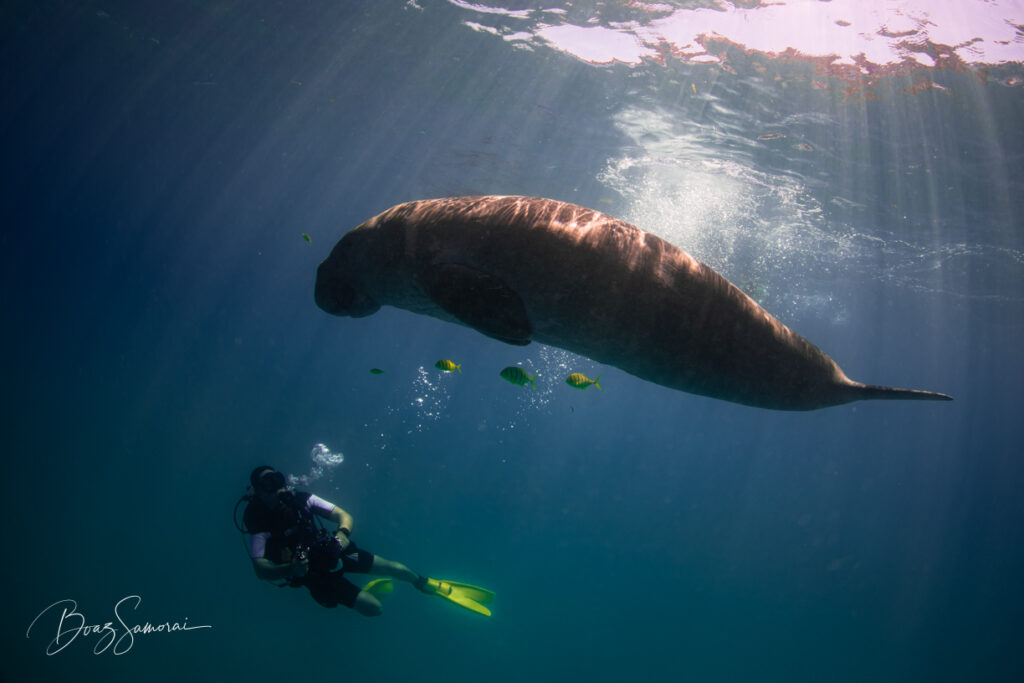
Dugongs – Dimipac Island & Caluit Island
Encountering dugongs in the wild is one of Coron’s most magical underwater experiences. These gentle, slow‑moving marine mammals are rare globally, yet Coron offers one of the best and most responsible opportunities to observe them in their natural seagrass habitat.
The Experience
Your dive begins in clear, shallow seagrass meadows where dugongs feed peacefully. When one appears, it’s unforgettable — a calm, graceful silhouette drifting through sunlit water, completely unbothered as you watch from a respectful distance. It’s serene, intimate, and unlike any other dive in the Philippines.
Additional Diving
- Dimipac Island — Gentle reef slopes, healthy coral gardens, and relaxed conditions with turtles, reef fish schools, nudibranchs, cuttlefish, and occasional stingrays.
- Caluit Island — Steeper walls, large coral bommies, and deeper sections that attract bigger marine life, including fusiliers, batfish, sweetlips, and the occasional pelagic visitor.
“One Week on Land and One Week on Water”
I spent an amazing two weeks on the Atlantis properties. The first week we lodged at the resort in Dumaguete and the second week aboard the Adventurer.
The Atlantis in Dumaguete has everything you need in a dive resort. When we arrive in Manila, the Atlantis staff greeted us in the international terminal and helped transfer us to the domestic terminal to Dumaguete. The staff was also waiting to collect us in Dumaguete and transferred us to the resort.
My room in Dumaguete was spacious, had 24/7 hot water shower, TV with local and English channels, and mini-refrigerator. Outside the room, there were 2 chairs, table and drying rack. The restaurant, which is situated on the beach, had tasty menu and fine selection of drinks.
The diving is great in Dumaguete is great especially if macro photography or video is your thing. The dive masters are very friendly and knowledgeable. The Atlantis has several boats to take divers to various sites. The dive shop is quite organized, upon arrival, you are assigned a large bin for to store your dive gear and hang your gear.
Across from the dive shop, there is a large air-conditioned dry photo room. The room has plenty of room to charge your gear, air guns to help clean your photo gear, and TV to display you images and video.
The spa on the resort was quite affordable and service was great for a post dive massage.
Aboard the Adventurer, the same level of service was delivered. The boat was very spacious with lots of areas to relax. The rooms were good for a liveaboard. The food varied and was tasty. Dive masters were quite friendly and helpful. There was ample space to charge photo and video gear plus an area to soak equipment in fresh water and air guns to help move sediments.
We did the Bohol tour, which was good. However, I was told the best tour is the seasonal Tubbbataha tour… just gives me another reason to return.
During the 2 weeks, I executed 44 enjoyable dives and would more than happily return to any Atlantis property.
Room Tip: Ask for an high floor ocean front room